Your Complete Fall Lawn Care Checklist for North Jersey
Ant’s Plants • September 2026 • North Jersey • 8 min read
Short Answer: Fall is the single most important season for your lawn. The work you do between September and November determines how your lawn looks next spring and how well it handles next summer. Your fall checklist should include aeration (mid-September through mid-October), overseeding (immediately after aeration), fall fertilization (two applications, one in September and one in late October or early November), final weed treatments for any lingering broadleaf weeds, leaf management, and a gradual reduction in mowing height heading into winter. Here’s the full breakdown with timing for the North Jersey area.
If you’ve made it through another North Jersey summer and your lawn is still standing, congratulations. Whether it came through looking great or it’s showing the scars of heat, drought, and weed pressure, the most important thing you can do right now is take advantage of fall.
We tell every customer the same thing: spring gets all the attention, but fall is where the real work happens. The investments you make in September and October pay dividends all the way through the following year. A lawn that gets proper fall care comes out of winter stronger, greener, thicker, and more resistant to everything the next summer throws at it.
Here’s your complete checklist, in the order things should happen.
Aerate: Mid-September Through Mid-October
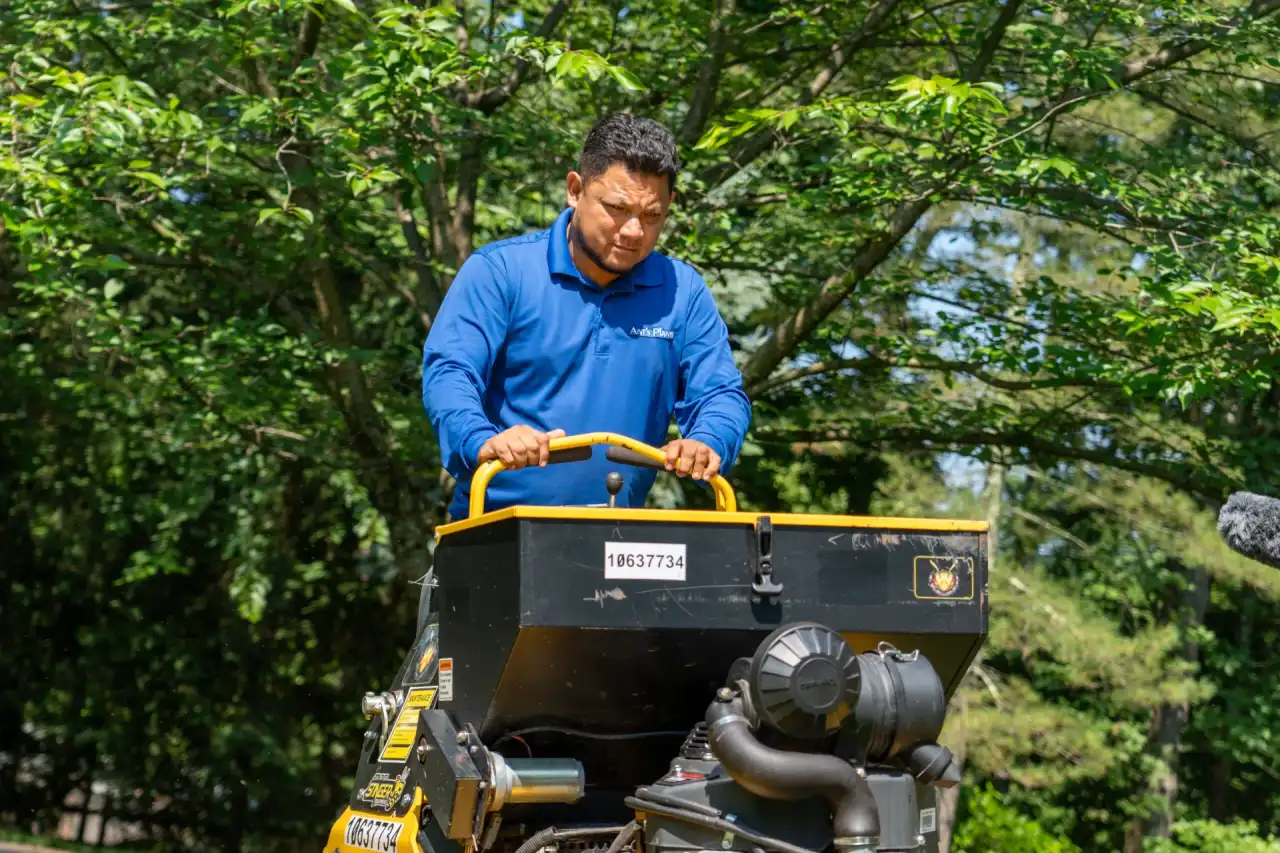
Core aeration is the foundation of fall lawn improvement. It relieves the soil compaction that builds up over the year from foot traffic, mowing, and rain, and it creates channels for water, air, and nutrients to reach the root zone.
The timing matters. You want to aerate when soil temperatures are still warm enough for grass recovery and seed germination (55 to 65 degrees at a 4-inch depth) but when the worst of summer heat has passed. In the North Jersey area, that window opens in mid-September and closes by mid-October.
For most residential lawns, one aeration per year is sufficient. Properties with heavy clay soil or high traffic may benefit from a second pass. The small soil plugs left on the surface after aeration break down within a week or two, so don’t worry about the temporary appearance.
Overseed: Immediately After Aeration
The best time to overseed is right after aeration, while the holes are fresh and open. This gives seed direct contact with soil, which dramatically improves germination rates compared to seeding on top of an existing lawn surface.
Choose a seed blend appropriate for your conditions. For most North Jersey lawns, a mix of Tall Fescue and Kentucky Bluegrass works well for sunny areas. Add Fine Fescue varieties for shaded sections. Use quality seed from a reputable source, not the cheapest bag at the hardware store. The difference in germination rate and long-term performance is significant.
After seeding, keep the seedbed consistently moist for the first 2 to 3 weeks. This usually means light watering once or twice daily until the new grass is established. Once the seedlings reach mowing height (about 3 inches), you can transition back to your normal watering schedule.
Fall Fertilization: Two Applications
Your lawn needs two fertilizer applications this fall, and they serve different purposes.
The first application, in September, provides the nutrition your grass needs during its fall growth surge. Cool-season grasses grow most actively when temperatures are between 60 and 75 degrees, which is exactly what we get in September and October. This application supports both the existing lawn and any new seedlings from overseeding.
The second application, in late October or early November, is a winterizer. This heavier application of slow-release nitrogen and potassium builds up the grass’s root reserves before winter dormancy. The nutrients are stored in the root system and fuel a faster, stronger green-up in spring. Skipping the winterizer is one of the most common mistakes homeowners make, and it shows in a delayed, patchy spring recovery.
Final Weed Treatments: September Through October
Fall is actually an excellent time to treat broadleaf weeds like dandelions, clover, and plantain. These weeds are actively pulling nutrients down into their root systems to prepare for winter, which means they also pull herbicide into their roots more effectively. A fall weed treatment is often more effective at eliminating persistent weeds than a spring treatment.
One important note: if you’re overseeding, you need to coordinate weed treatment timing carefully. Most post-emergent herbicides should not be applied within 2 to 4 weeks of seeding, depending on the product. Your lawn care provider can time these applications to avoid any conflict with your overseeding schedule.
Leaf Management: Ongoing Through November
Leaf removal isn’t just about aesthetics. A thick layer of fallen leaves blocks sunlight, traps moisture, and creates conditions for fungal disease. Left in place over winter, a heavy leaf layer can smother grass and create dead patches that need repair in spring.
You don’t need to remove every single leaf the moment it falls. A light scattering of leaves can be mulched with your mower without any negative effect. But once leaves start piling up enough to cover the grass, they need to be removed or mulched down.
Mulching with a mulching mower is an excellent approach for moderate leaf coverage. The finely chopped leaf material breaks down quickly and adds organic matter to the soil. For heavy leaf coverage, especially under large oaks or maples, removal is the better option to prevent matting.
Adjust Your Mowing Height: Gradual Reduction
During summer, we recommend mowing at 3.5 to 4 inches. As fall progresses and growth slows, gradually lower your mowing height to about 2.5 to 3 inches for your final mowings of the season.
Going into winter at a shorter height reduces the chance of snow mold, a fungal disease that develops under matted, too-tall grass during extended snow cover. The key word is gradual. Don’t drop from 4 inches to 2.5 inches in one mowing. Reduce by half an inch each mowing over the last few weeks of the season.
Your last mowing in the North Jersey area typically happens in late November, though this varies year to year depending on temperatures. Keep mowing as long as the grass is actively growing.
Optional but Valuable: Soil Testing and Lime
If you haven’t had a soil test in the past two years, fall is a great time to do one. Your county extension office offers affordable testing that tells you your soil’s pH level, nutrient content, and organic matter percentage.
Many North Jersey soils tend toward the acidic side, and cool-season grasses prefer a pH between 6.0 and 7.0. If your soil is below 6.0, a lime application in fall gives the material all winter to work into the soil and adjust the pH before the spring growing season begins. Correcting pH alone can dramatically improve how well your lawn responds to fertilizer.
Watering Changes in Fall Too
Most people either keep irrigation running on the summer schedule until they shut it down for winter, or they turn it off the day after Labor Day. Both are wrong, and if you have just overseeded, the second one is expensive.
Cooler air and shorter days mean the lawn loses far less water than it did in August, so a schedule that was correct in midsummer now overwaters. Overwatered fall turf in North Jersey is an invitation to fungal disease, particularly in shaded areas that stay damp through the morning.
If you overseeded, the rule flips for a few weeks. New seed needs the top inch of soil kept consistently moist until it germinates, which means short, frequent cycles rather than long soaks. Once the new grass has been mowed twice, taper back toward deeper and less frequent watering.
What Not to Do This Fall
A few common habits quietly undo the rest of the list.
Do not apply a broadleaf weed control over newly seeded areas. Most products will kill young grass along with the weeds, and the label restrictions exist for good reason. Wait until the new grass has been mowed three or four times.
Do not scalp the lawn on the final cut of the year. Taking it down too far exposes the crown to winter desiccation, and the lawn enters spring already behind.
And do not leave a thick mat of wet leaves sitting on the turf through winter. It smothers the grass underneath and creates close to ideal conditions for snow mold.
What to Do Next
The best time to start your fall lawn care is now. If you haven’t scheduled your aeration and overseeding yet, September fills up fast for lawn care companies in our area. The sooner you book, the better your chances of hitting the ideal mid-September window.
If you want help putting together a fall plan specific to your property, we’re happy to come out and give you an honest assessment. We’ll tell you which items on this checklist will make the biggest difference for your particular lawn and help you prioritize if you can’t do everything at once. Fall is short, but the impact of getting it right lasts all year.