Lawn Care Program
How to Choose the Right Lawn Care Company in NJ (Questions to Ask)
Ant’s Plants • November 2026 • North Jersey • 6 min read
Short Answer: The right lawn care company for you is one that is properly licensed and insured, explains their approach in terms you understand, customizes their program to your specific property, stands behind their work with a real guarantee, and communicates proactively. Before signing up with anyone, ask these key questions: Are you licensed and insured? How do you determine what my lawn needs? What’s included in each visit? What happens if I’m not satisfied between treatments? Who will be treating my lawn? Here’s why each question matters and what a good answer sounds like.
Choosing a lawn care company feels harder than it should be. Every company’s website says they’re the best, every quote looks a little different, and it’s hard to know what you’re actually comparing when the terminology and program structures vary from one provider to the next.
We wrote a broader post earlier this year about what to look for in a lawn care company. This post is more specific. These are the actual questions we’d recommend you ask any company you’re considering, including us, and what the answers tell you about how that company operates.
"Are You Licensed and Insured in New Jersey?"
This should be your first question, and the answer should be immediate and unequivocal. In New Jersey, any company applying pesticides, herbicides, or certain fertilizers to your lawn must hold a valid pesticide applicator license from the NJ Department of Environmental Protection. The technicians performing the work must be certified or supervised by a certified applicator.
Ask for their license number and verify it. A reputable company will provide this without hesitation. Also ask about liability insurance and worker’s compensation coverage. If a technician is injured on your property or a treatment causes damage, proper insurance protects you.
A company that hesitates, deflects, or can’t immediately provide licensing information is not one you want applying chemicals to your yard.
"How Do You Determine What My Lawn Needs?"
This question reveals whether the company takes a customized approach or runs a one-size-fits-all program. A good answer involves some version of "we assess your property first." They should be asking about or evaluating your grass type, soil conditions, sun and shade patterns, existing weed pressure, and any specific concerns you have.
A red flag answer is something like "we apply the same proven program to all our lawns." That might work for some properties, but it ignores the reality that a shaded clay-soil lawn in Morristown has completely different needs than a full-sun sandy-loam lawn in Stirling.
The best companies will ask you questions too. If a provider gives you a quote without ever looking at your property or asking about your lawn’s history, that tells you something about how much individual attention your lawn will receive once you’re a customer.
"What Exactly Is Included in Each Visit?"
This is where you find out what you’re actually paying for. Ask for a breakdown of each scheduled treatment: what products are applied, what service is performed, and what the purpose of each visit is.
Some companies bundle everything into a single program price. Others have a base price with add-ons for grub control, aeration, lime application, or other services. Neither model is inherently better, but you need to understand what’s included so you can make an apples-to-apples comparison between providers.
Pay particular attention to whether weed control is included in every visit or only certain ones, whether grub prevention is part of the program or an optional extra, whether the company monitors for disease and pest issues during each visit, and whether post-treatment notes are provided telling you what was done.
"What Happens If I Have a Problem Between Scheduled Visits?"
This is one of the most important questions you can ask, and the answer varies dramatically between companies. The best companies offer free service calls between scheduled treatments. If weeds break through, if you notice an insect problem, or if something doesn’t look right, they come back and address it at no additional charge.
Other companies treat their scheduled visits as the extent of their service obligation. Anything outside those visits costs extra or simply isn’t available. This can lead to frustration when problems develop mid-cycle and you’re told to wait until the next scheduled treatment.
Ask specifically: "If I see a weed breakout or a problem area three weeks after a treatment, do you come back? Is there a charge?" The answer tells you more about the company’s commitment to results than almost any other question.
"Who Will Be Treating My Lawn?"
Technician consistency is one of the biggest factors in long-term lawn care results. A technician who knows your property, its history, and its problem areas makes better decisions than one seeing your lawn for the first time.
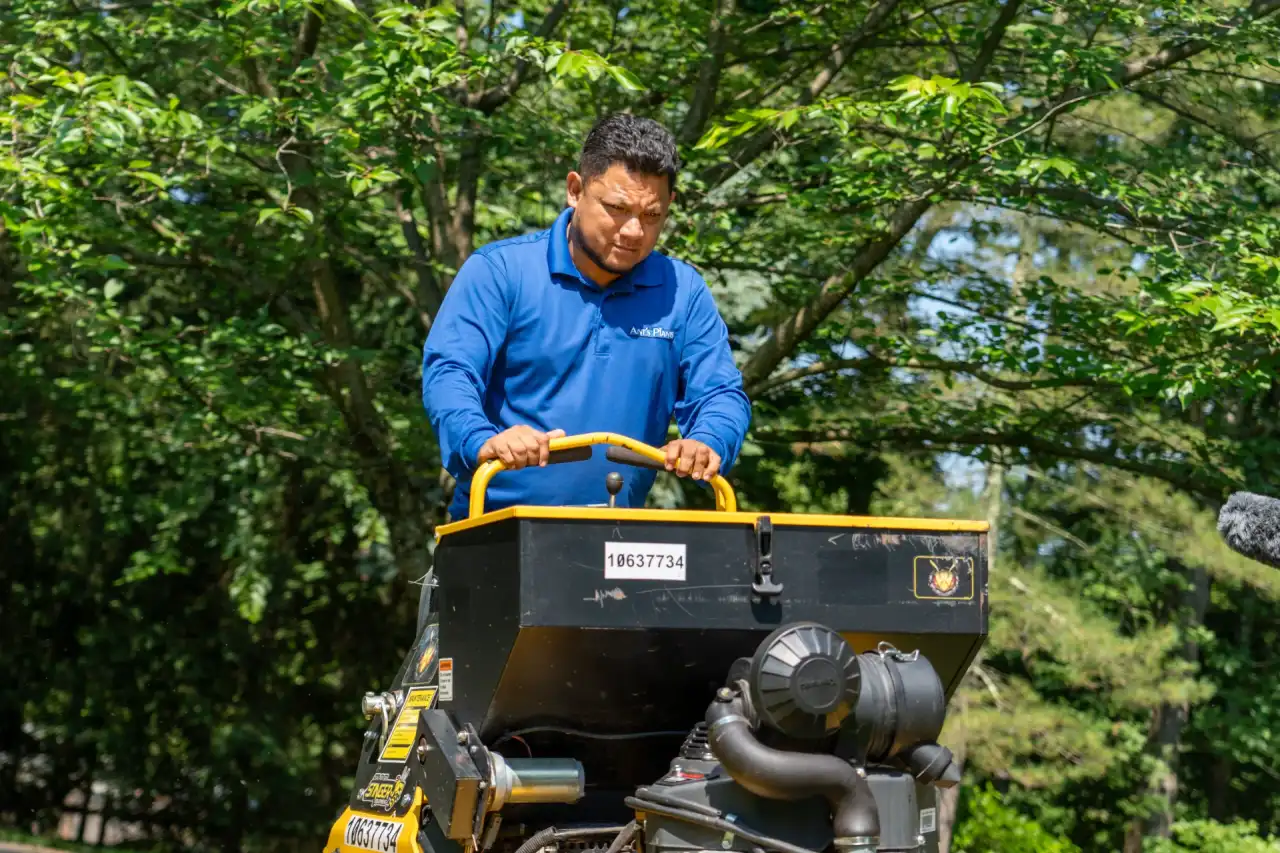
Ask whether you’ll have a consistent technician or whether different people will come each time. Ask whether the technician is certified or working under supervision. And ask how the company handles communication between technician and customer, whether that’s door tags, emailed reports, or phone calls.
Companies with high technician turnover or large routes where technicians treat 20 or more properties per day may struggle to provide the individual attention your lawn deserves. This isn’t always the case, but it’s worth understanding the model.
"Can You Explain Your Guarantee?"
Almost every lawn care company claims to guarantee their work. The question is what that guarantee actually means in practice.
A strong guarantee means the company takes responsibility for results, not just for showing up and applying product. It means they’ll return between visits if needed, adjust their approach if something isn’t working, and work with you until the issue is resolved.
Ask for specifics. What triggers the guarantee? What does the company do when it’s triggered? Are there conditions or exclusions? Some guarantees have so many caveats that they’re effectively meaningless. Others are straightforward commitments to customer satisfaction.
"Can I Talk to Current Customers?"
A company that is confident in their work should be willing to connect you with current customers who can share their experience. Online reviews are helpful but curated. A direct conversation with a customer in your area gives you unfiltered insight into what it’s actually like to work with that company.
If a company can’t or won’t provide references, consider why that might be. Companies with happy, long-term customers are usually eager to let those customers speak on their behalf.
What to Do Next
If you’re shopping for a lawn care company for next season, take these questions to every provider you’re evaluating. The answers will quickly separate the companies that are invested in doing great work from those that are just filling routes.
We welcome these questions from prospective customers. In fact, we prefer them. A homeowner who asks tough questions is one who cares about their lawn, and those are exactly the customers we want to work with. Reach out anytime and we’ll give you straightforward answers to every question on this list.