Aeration
What Is Core Aeration and Why Does Your NJ Lawn Need It?
Ant’s Plants • October 2026 • North Jersey • 6 min read
Short Answer: Core aeration is the process of pulling small plugs of soil out of your lawn to relieve compaction and improve the flow of water, air, and nutrients to the grass roots. It’s done with a machine that has hollow tines that punch into the ground and extract soil cores about 2 to 3 inches long. Most NJ lawns benefit from annual aeration because our clay-heavy soils compact easily, which restricts root growth and reduces the effectiveness of watering and fertilization. Aeration is one of the most underrated lawn care services and produces some of the most dramatic long-term improvements. Here’s everything you need to know.
If you’ve been told your lawn needs aeration and you’re not entirely sure what that means or why it matters, you’re not alone. Aeration is one of those lawn care services that doesn’t get the attention it deserves, partly because the results happen below the surface where you can’t see them directly.
But the impact on your lawn’s health is significant. In fact, for many North Jersey lawns, aeration is the single service that would make the biggest difference in overall turf quality, and it’s the one most homeowners are either skipping or don’t know about.
What Compaction Actually Does to Your Lawn
To understand why aeration matters, you need to understand compaction. Every time someone walks across your lawn, every time you mow, every time it rains, the soil beneath the surface gets pressed a little tighter. Over months and years, this compression reduces the pore space between soil particles.
Healthy soil has a balance of solid particles, water, and air. When compaction squeezes out the air spaces, several things happen. Water sits on the surface instead of soaking in, which leads to runoff and shallow root development. Roots can’t push through dense soil, so they stay shallow and weak. Fertilizer you apply sits near the surface where it’s less effective. And beneficial soil organisms that need oxygen to thrive become less active.
The symptoms of compaction show up on the surface as thin grass, excessive thatch buildup, standing water after rain, areas that dry out faster than others, and general decline that doesn’t respond well to fertilization or watering. Many homeowners blame their grass, their fertilizer, or their watering habits when the real problem is the soil beneath.
North Jersey soils are particularly prone to compaction because many areas have significant clay content. Clay particles are small and flat, which means they pack together more tightly than sandy or loamy soils. If your Basking Ridge, Stirling, or Morristown lawn sits on clay soil, annual aeration isn’t optional. It’s essential.
How Core Aeration Works
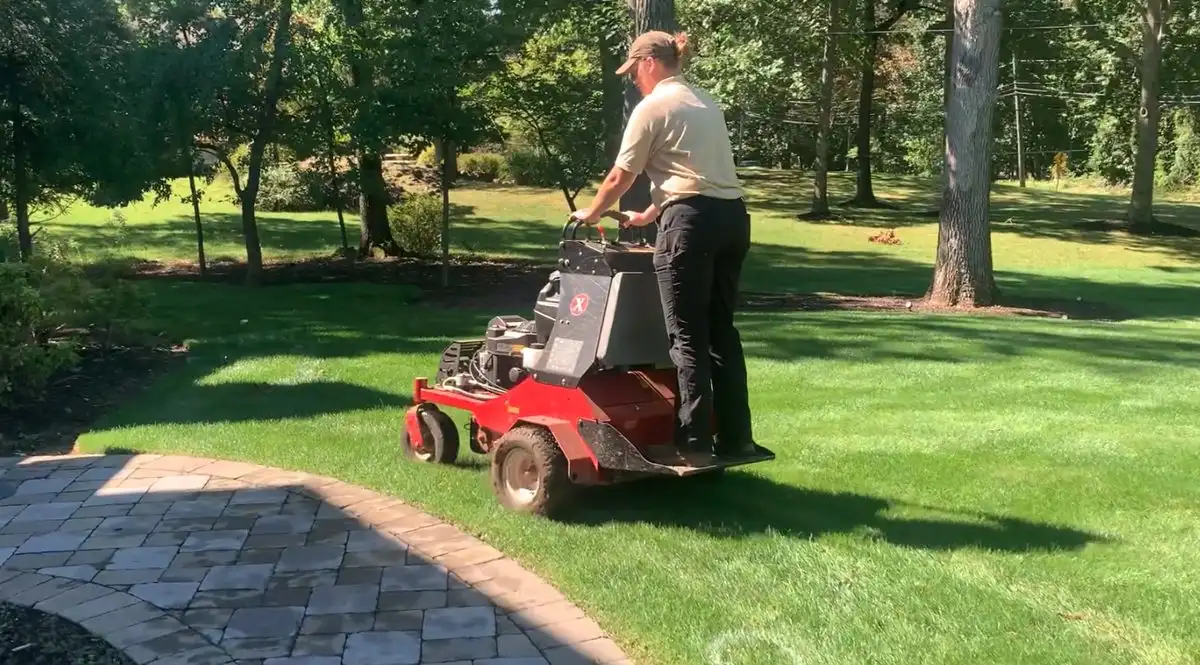
A core aerator is a machine with a row of hollow metal tines mounted on a drum. As the machine moves across your lawn, the tines punch into the soil and pull out small cylinders of earth called cores or plugs. These plugs are typically 2 to 3 inches long and about the width of your finger.
The machine leaves thousands of these small holes across your entire lawn, each one creating a channel that allows air, water, and nutrients to bypass the compacted surface layer and reach the root zone directly.
The extracted plugs are deposited on the lawn surface. They look messy for a few days, which is the number one thing homeowners notice and worry about. But the plugs break down naturally within a week or two, especially if you mow over them. As they decompose, they return organic matter and beneficial microorganisms to the soil surface, which helps break down thatch.
It’s worth noting that spike aerators, the type with solid tines that poke holes without removing cores, are not the same thing. Spike aeration can actually increase compaction around each hole because it pushes soil sideways rather than removing it. Core aeration is the only type that effectively relieves compaction.
What You’ll Notice After Aeration
The most immediate visible change is the plugs on the surface, which disappear within one to two weeks. Beyond that, the improvements happen gradually but are very real.
Within the first few weeks, you may notice that water soaks into your lawn faster after rain or watering. Areas that previously puddled or showed runoff may drain more effectively. If you’re watering with sprinklers, you might find that the same watering duration produces better results because more water is reaching the roots.
Over the following weeks and months, the grass around each aeration hole begins growing more vigorously as roots expand into the newly opened space. Fertilizer applications become more effective because nutrients penetrate deeper. If you overseeded after aeration, you’ll see new grass plants establishing in and around the aeration holes.
The cumulative effect over multiple years of annual aeration is transformative. Lawns that receive consistent annual aeration develop deeper root systems, denser turf, better drought tolerance, and more efficient nutrient use than lawns that are never aerated. It’s one of those services where the full benefit reveals itself over seasons, not days.
When and How Often to Aerate
For cool-season lawns in North Jersey, the ideal aeration window is mid-September through mid-October. This timing allows the lawn to recover quickly during the fall growth period and takes maximum advantage of overseeding if you’re doing both.
Spring aeration (April to May) is also beneficial, particularly for compaction relief, but it’s not the best time for combining with overseeding since new spring seedlings face immediate summer stress.
Most residential lawns benefit from aeration once per year. If your soil is heavily clay-based or your property gets significant foot traffic, twice per year (spring and fall) can accelerate improvement. After several years of consistent annual aeration, some lawns with lighter soil types can shift to every other year, but for most North Jersey properties, annual remains the recommendation.
Aeration and Overseeding: The Power Combination
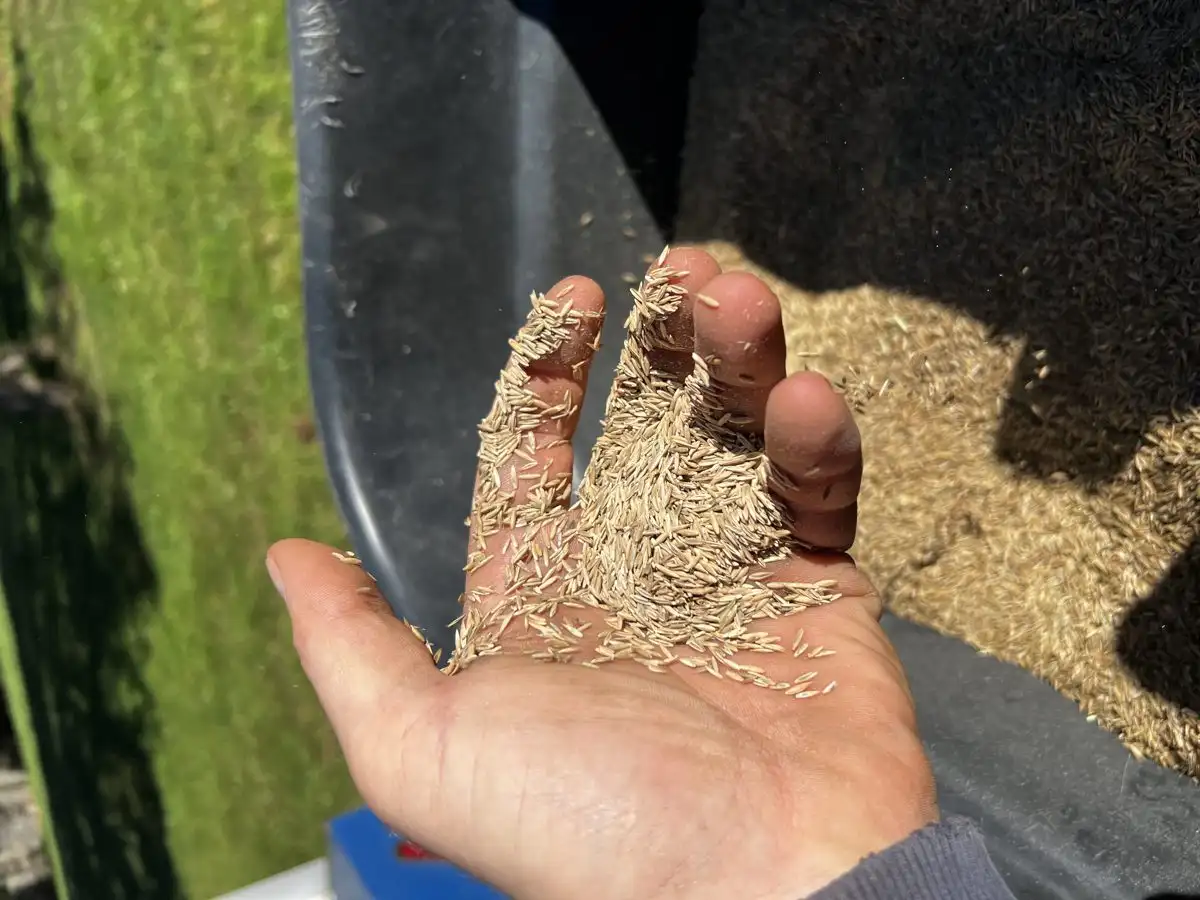
Aeration and overseeding are most effective when done together. The aeration holes provide ideal seed-to-soil contact points, dramatically improving germination rates compared to broadcasting seed over an existing lawn surface.
Seeds that fall into aeration holes are sheltered from wind and foot traffic, have direct contact with moist soil, and are naturally covered as the plug material breaks down around them. It’s the closest you can get to ideal seeding conditions without tearing up your entire lawn and starting over.
If you’re going to invest in overseeding, doing it without aeration first is leaving significant results on the table. The incremental cost of combining the two services is much less than doing them separately, and the results are noticeably better than either service alone.
What to Do Next
If your lawn has never been aerated, or if it’s been more than a year since the last time, this fall is a great opportunity to get started. The improvement from a single aeration is noticeable, and the improvement compounds with each subsequent year.
We’re happy to assess your property, evaluate your soil conditions, and recommend whether annual aeration, combined aeration and overseeding, or a different approach makes the most sense for your specific lawn. Whatever your situation, understanding what’s happening below the surface is the first step toward building the lawn you want above it.