Ant's Plants • April 2026 • Basking Ridge, NJ
What to Do About Crabgrass in Basking Ridge Before It Takes Over
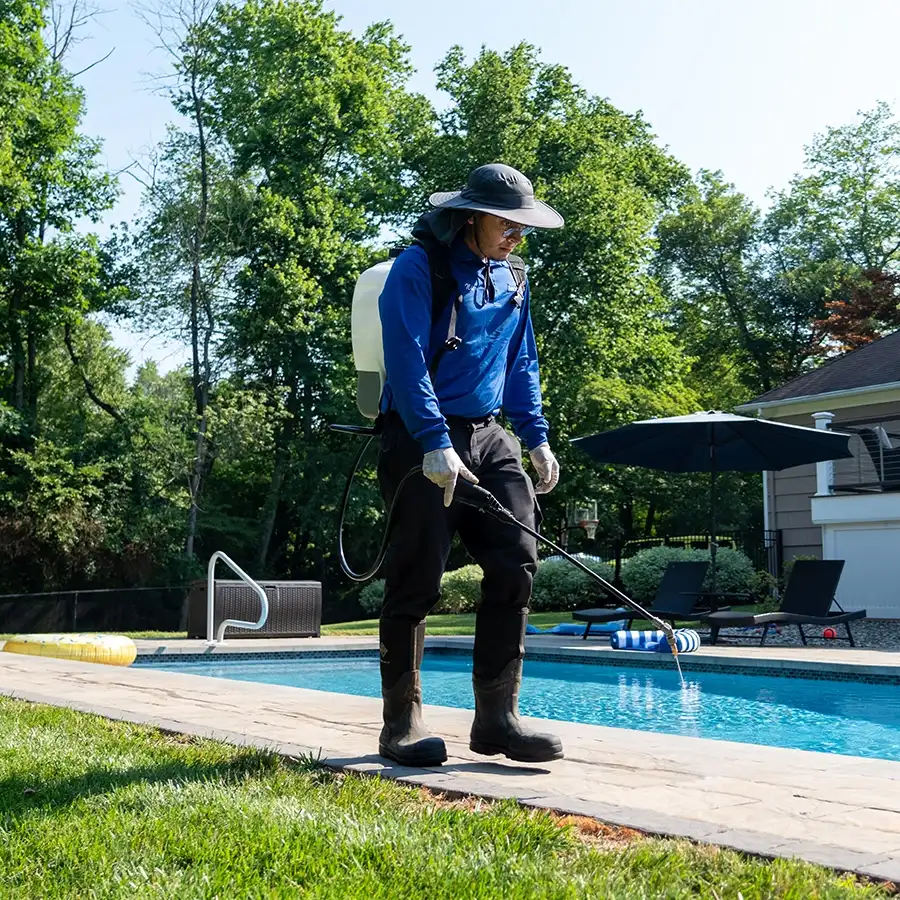
Short Answer: The most effective way to stop crabgrass is a properly timed pre-emergent herbicide applied before soil temperatures reach 55°F consistently, which in the Basking Ridge area typically happens between mid-March and mid-April. If crabgrass has already sprouted, post-emergent treatments can help but are far less effective than getting ahead of it. Here’s everything you need to know about why crabgrass keeps coming back and what actually works to stop it.
If you’re reading this, there’s a good chance you’re standing in your yard right now, looking at patches of thick, flat, light-green grass that doesn’t match the rest of your lawn, and feeling that familiar frustration.
Crabgrass has a way of making even well-maintained lawns look neglected. And the worst part? Once you can see it, it’s already winning.
We hear it from homeowners in Basking Ridge, Bernardsville, and across the North Jersey area every spring: “I thought I took care of this last year. Why is it back?” The answer comes down to understanding how crabgrass works and why timing is everything.
Why Crabgrass Keeps Coming Back
Crabgrass is an annual weed, which means each plant dies at the end of the season. But before it does, a single crabgrass plant can drop thousands of seeds into your soil. Those seeds sit dormant all winter, waiting for the soil to warm up in spring.
Once soil temperatures hit about 55°F for several consecutive days, those seeds start germinating. And here’s where most homeowners get caught off guard: by the time you can actually see crabgrass in your lawn, it’s been growing for weeks and the window for the most effective treatment has already closed.
This is why the “I’ll deal with it when I see it” approach almost never works. Crabgrass prevention is about stopping germination before it happens, not pulling plants after they’re established.
When to Apply Pre-Emergent in North Jersey
In the Basking Ridge and greater North Jersey area, the ideal window for pre-emergent application is typically between mid-March and mid-April. The exact timing shifts a little each year depending on weather patterns, but the general rule is to get your pre-emergent down before soil temperatures consistently reach 55°F.
A good reference point that many lawn care professionals use: when forsythia bushes in your neighborhood start blooming, it’s time. Nature gives you a visual cue if you know what to look for.
The product itself matters less than the timing. Whether you’re using a granular pre-emergent or a liquid application, getting it down at the right time is what determines whether it works.
Here’s what we’ve found trips up a lot of homeowners: applying too late. Life gets busy, spring sneaks up on you, and by the time you get to the lawn store in late April, crabgrass has already started germinating. At that point, a pre-emergent can’t do its job because the barrier needed to prevent germination needs to be in place before seeds start sprouting.
What If Crabgrass Has Already Appeared?
If it’s past mid-April and you’re already seeing crabgrass in your lawn, you’re not out of options, but the approach changes.
Post-emergent herbicides designed specifically for crabgrass can knock back existing plants. Products containing quinclorac are commonly used and can be effective on younger crabgrass plants. However, once crabgrass reaches its mature, tillering stage in mid-summer, even post-emergent products struggle to kill it completely.
The honest truth is that if crabgrass has a head start, the best strategy is often a combination approach: treat what you can now, then commit to a properly timed pre-emergent program next spring so you’re ahead of it. One well-timed prevention is worth ten reactive treatments.
The Connection Between Lawn Health and Crabgrass
Here’s something that doesn’t get talked about enough: the healthier and thicker your lawn is, the harder it is for crabgrass to establish.
Crabgrass thrives in thin, bare, or stressed areas because it needs sunlight to germinate. A dense, well-fed lawn naturally crowds it out. This is why a comprehensive lawn care program that includes proper fertilization, aeration, and overseeding does more to fight crabgrass over the long run than any single herbicide application.
We often see homeowners who focus exclusively on weed control products but neglect the fundamentals of building a thick, healthy lawn. The weeds are a symptom. The root cause is usually a lawn that’s undernourished, compacted, or too thin to defend itself.
What to Do Next
If you’re in the Basking Ridge area and crabgrass has been a recurring frustration, here’s what we’d recommend:
If it’s still early spring, get a pre-emergent application down as soon as possible. Whether you do it yourself or have a professional handle it, timing is the single most important factor.
If crabgrass has already appeared, consider a targeted post-emergent treatment now and a pre-emergent commitment for next spring.
And regardless of where you are in the season, investing in your lawn’s overall health through fertilization, aeration, and overseeding is the best long-term defense against crabgrass and every other weed competing for space in your yard.
If you’d like a professional assessment of your lawn and a plan tailored to your specific property, we’re here for that conversation. We’ll take a look, tell you exactly what we see, and help you decide on the right approach, whether that’s working with us or tackling it on your own.