7 Lawn Problems We Diagnose Every Spring in Basking Ridge
Ant's Plants • May 2026 • Basking Ridge, NJ
Each spring in Basking Ridge, the same seven lawn problems show up on most properties: snow mold from melting cover, vole runs through the turf, salt damage along the driveway, crabgrass breaking through, brown patches from compaction or disease, thin spots from winter desiccation, and broadleaf weed pressure. Most are fixable with the right combination of cleanup, targeted treatment, and a fertilization plan that recovers the grass before summer heat sets in.
What We See on Almost Every Basking Ridge Property in Early May
Walk almost any Basking Ridge property in early May and you'll see the same handful of problems repeating from yard to yard. Some are obvious. Some are easy to mistake for something else. Most homeowners look at their lawn after a long winter and feel a little overwhelmed by everything that needs attention. We've been doing this long enough that we can usually walk a yard and call out what's happening within ten minutes. Here are the seven most common lawn issues we see every spring across Basking Ridge, Bernardsville, Stirling, and Summit.
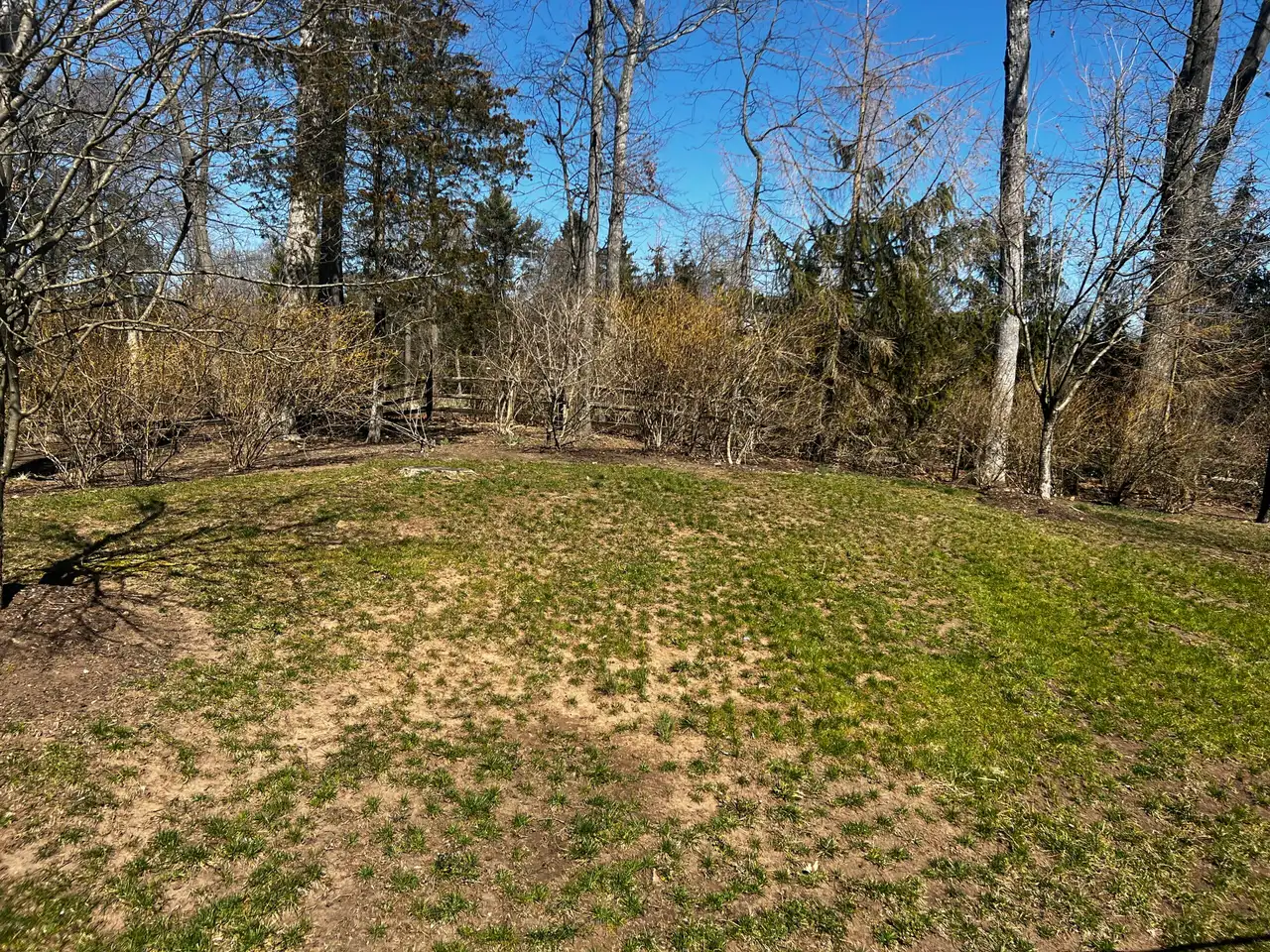
Problem #1: Snow Mold
If you have circular gray or pink patches in your lawn, sometimes with a matted, web-like crust, that's snow mold. It develops under prolonged snow cover, especially when the lawn went into winter with too much top growth. Pink snow mold (sometimes called Fusarium patch) shows a salmon-colored ring at the active edge. Gray snow mold has more of a fuzzy white-gray appearance. Both can show up on the same lawn during heavier snow years. The patches are typically 4 to 12 inches across and feel crusty when stepped on.
The Fix
We rake out the affected areas to break up the matted thatch and let air circulate. Most snow mold patches recover on their own once exposed to sunlight and the soil dries out. For severe cases, a light overseeding helps fill in any patches that don't bounce back. Recovery timeline is typically 3 to 6 weeks of warm weather.
Problem #2: Vole Runs
Those shallow, snaking trails of dead grass that look like someone dragged a stick through your yard are vole runs. Voles are small rodents that tunnel just below the snow line through the winter, eating grass crowns as they go. They look terrible but the damage is almost always cosmetic.
The Fix
Once the soil firms up, we lightly rake out the runs to lift the dead grass, and the surrounding turf typically fills in within a few weeks of warm weather. If the damage is severe or the runs cross open lawn areas, we'll overseed to speed recovery. Properties next to wooded edges or with heavy mulch beds tend to see more vole activity.
Problem #3: Salt Damage Along the Driveway
If you have brown, dead grass running parallel to your driveway or walkway for two or three feet, that's road salt damage. Salt accumulates in the soil through the winter and dehydrates the grass, often killing it outright in heavy zones. Properties along main roads where municipal salt spray reaches the lawn typically face this issue every year.
The Fix
The fix is a flushing irrigation, sometimes combined with gypsum to help leach the salt out of the root zone. We follow with overseeding once the soil chemistry is back in balance. Long term, redirecting plow piles or switching to a less aggressive de-icer helps prevent recurrence. Permanent buffers of salt-tolerant plantings or hardscape benefit properties with chronic annual damage.
Problem #4: Crabgrass Breaking Through
If you're seeing wide, light-green grass blades growing in patches and looking different from the rest of the lawn, that's likely crabgrass starting to come in. In Basking Ridge, crabgrass typically germinates when soil temperatures hit 55 degrees consistently — usually mid to late April depending on the year.
The Fix
If pre-emergent was applied at the right time, crabgrass should be minimal. Post-emergent treatments work but are less reliable as the crabgrass matures — crabgrass with more than 4 leaves becomes increasingly difficult to control. By July, post-emergent options are limited and most homeowners decide to live with it for the season and prioritize prevention next spring. The sooner we address it, the better.
Problem #5: Brown Patches
This one needs careful diagnosis because brown patches can come from a half-dozen different causes: soil compaction, fungal disease, dog urine, irrigation issues, grub damage, or simple drought stress can all create the same visual symptom.
How We Diagnose It
🔵 Disease patches often have a distinct ring or color shift at the edge.
🔵 Compaction patches usually correlate with foot traffic or high spots.
🔵 Grub damage shows grass that pulls up easily because roots have been chewed off.
🔵 Irrigation dry patches typically map to specific zones or sprinkler heads.
Problem #6: Thin Spots from Winter Desiccation
Some winters, especially when there's little snow cover and a lot of cold dry wind, lawns can develop thin or browned-out areas from desiccation. The grass essentially dried out without the protective layer of snow most years provide. Exposed properties on hilltops or with limited windbreak see this most often.
The Fix
These spots usually recover with consistent fertilization through spring. If the thin areas are larger than a few square feet, we recommend overseeding to speed up recovery before summer heat further stresses the area.
Problem #7: Heavy Broadleaf Weed Pressure
Dandelions, clover, plantain, ground ivy, wild violet — they all show up in spring, and they all signal the same thing: the lawn isn't dense enough to crowd them out.
The Fix
Spot treatment with a selective broadleaf herbicide handles the visible weeds. The longer-term work is fertilization, mowing height adjustment, and soil amendments to thicken the turf. Spraying alone gets the weeds you can see right now but doesn't change the conditions that let them establish. Note: wild violet specifically requires triclopyr-based products applied in fall rather than standard spring weed-and-feed.
What We Look at First — and What to Do Next
When we walk a property in May, the first thing we do is identify which problems are urgent versus which can wait. Snow mold, vole runs, and desiccation are typically not urgent. Salt damage and chronic compaction benefit from earlier action. Crabgrass and disease pressure are time-sensitive because they get worse the longer they go untreated.
The second thing we look at is whether the visible problems are symptoms of larger issues. A property with significant compaction, heavy thatch, or thin turf will face the same problems again next spring no matter how good this year's treatment is. Real long-term results come from addressing root conditions, not just symptoms.
If you're looking at your Basking Ridge lawn right now and seeing two or three of these problems, the right move is a proper diagnosis before you start treating. Most spring lawn issues respond beautifully to the right intervention if we catch them in May, before summer stress compounds them.