Why Is My Lawn Full of Weeds Even With a Service?
Common Causes in North Jersey
Ant's Plants • May 2026 • North Jersey
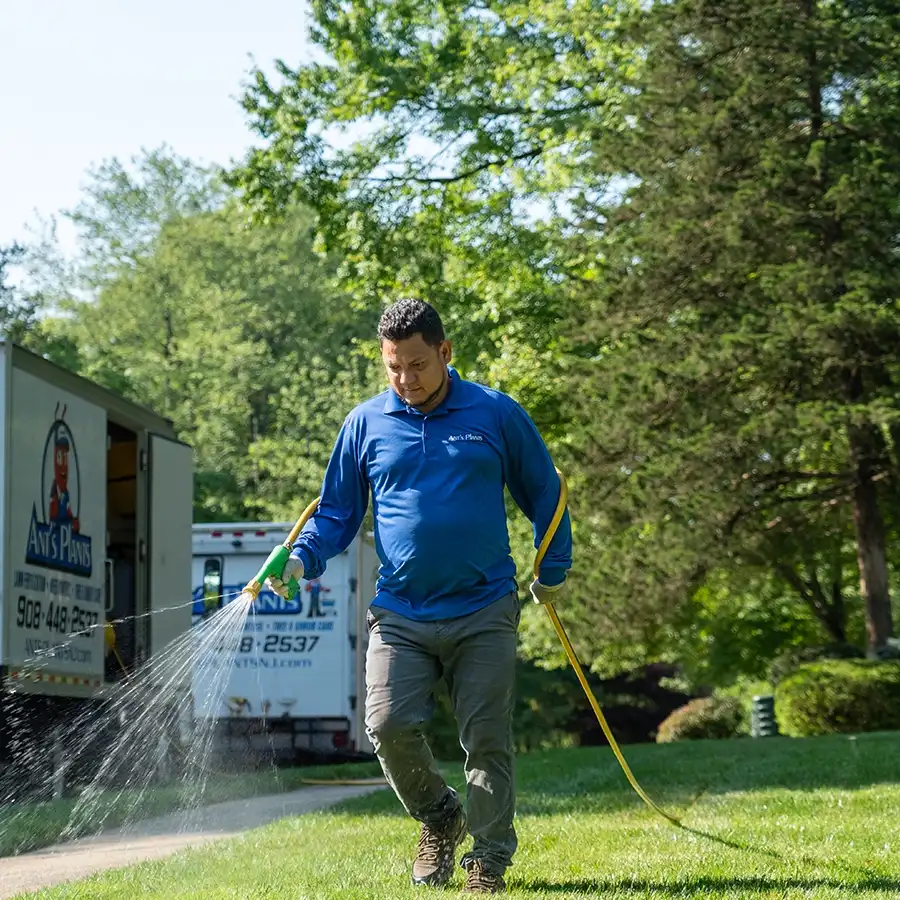
If you're paying for lawn care and still seeing weeds, there are usually six honest reasons. The pre-emergent window was missed, the product wasn't strong enough for the weed type, there were timing gaps between applications, the soil itself favors weeds, your mowing height is working against the treatments, or escape weeds slipped through and need spot work. Most of the time it's a combination of two or three of these.
Sound Familiar? You're Not Alone.
Every spring, homeowners across Stirling, Basking Ridge, Bernardsville, Summit, and Westfield call us for a second opinion. They did the responsible thing — hired a professional service, signed up for the program, paid the invoices — and are still seeing the same weeds as last year, maybe more of them. Here's what's really going on.
Reason 1: The Pre-Emergent Window Was Missed
Pre-emergent herbicide works by creating a barrier in the soil that stops crabgrass and certain other weeds from germinating. It must be applied before soil temperatures hit around 55°F consistently. In North Jersey, that window typically opens in late March or early April. If a service applies pre-emergent in mid-April after a warm March, the crabgrass has already germinated — the treatment showed up after the door was already open.
Pre-emergent also has a finite effective life — most products provide 8 to 12 weeks of protection. If your single spring application happens in early April, the protection is gone by mid-June, leaving the late-summer flush of weeds unaddressed. Properties with significant weed pressure benefit from a split application strategy, with a second pre-emergent treatment in early summer to maintain the barrier.
Reason 2: The Product Wasn't Strong Enough for the Weed Type
Not all weeds respond to the same products. A blanket herbicide that handles dandelions and clover well may do almost nothing to nutsedge, ground ivy, or wild violet. If you're seeing patches of broadleaf weeds that look untouched even after treatment, the product may not have included the active ingredient those particular weeds need.
Wild Violet
Requires triclopyr-based products applied in fall. Standard spring weed-and-feed will do almost nothing against established violets, regardless of how many applications you make.
Yellow Nutsedge
Needs sulfentrazone or halosulfuron. Each problem species has a specific tool, and using the wrong one is wasted effort.
Reason 3: Treatment Gaps in the Program
Most full programs include 5 to 8 applications across the year, but the gaps between them can stretch six to eight weeks during the heaviest growth periods. New weeds can germinate, mature, and start producing seeds in that window. If your program is on the lighter side — say 4 applications per year — you're likely seeing the consequences of those gaps.
The math matters: a weed seed germinating immediately after one application can be a flowering, seed-producing plant before the next visit 6 weeks later. Each missed window doesn't just leave existing weeds untreated — it lets new generations establish that compound the problem next year.
Reason 4: Your Soil Conditions Favor Weeds
This is the one most companies don't talk about, because it's harder to fix. Healthy turf outcompetes weeds. When the soil pH is off, when the lawn is compacted, or when nutrient levels are low, the grass weakens and weeds find room to move in. No herbicide schedule can permanently fix a soil problem.
If your North Jersey lawn has been treated for a few seasons and the weed pressure isn't improving, we'd strongly recommend a soil test. Most soils in our area run slightly acidic, and a lime application combined with proper aeration often does more for weed control than another spray. The visual signal: areas where grass is dense almost never have weed problems. Areas where grass is thin almost always do. The thin areas are the diagnosis.
Reason 5: Mowing Practices Are Working Against the Treatments
Mowing cool-season grass too short — especially during warm months — opens the canopy and lets sunlight reach the soil where weed seeds are waiting. For most North Jersey lawns, we recommend keeping the mower at 3.5 to 4 inches through spring and summer. We've seen lawns transform with no other change beyond raising the deck height. If you're using a landscaping service that scalps the lawn at 2 inches every week, you're fighting your weed control program every Tuesday.
Dull blades also matter. Dull blades tear the grass tips, creating ragged tissue that weakens the lawn and gives weeds an opening. Sharpening blades once or twice per season is one of the simplest changes that makes a measurable difference.
Reason 6: Escape Weeds Need Spot Treatment
Even on a well-managed program, a few stubborn weeds will always escape — wild violet in shaded corners, nutsedge near downspouts, ground ivy along garden edges. These need targeted spot treatments between regular visits, not just a broadcast spray. A lawn care company that won't come back for a stubborn patch isn't really standing behind their work.
How to Tell Which Reason Is Yours
Crabgrass in Spring
Likely pre-emergent timing or coverage gaps.
Persistent Broadleaf Weeds
Year over year in the same spots? Likely product mismatch or soil conditions.
Weeds Along Traffic Paths
Matching foot traffic or drainage areas? Likely soil compaction or thin turf.
Looks Great After Treatment, Then Returns
Likely program gap or escape weed issue.
Weeds in Shaded or Wet Areas
Likely violet or nutsedge — needs specialized treatment rather than broad-spectrum herbicide.
Get a Real Diagnosis — Not Another Sales Pitch
We'd be glad to walk your lawn with you, identify the specific weeds you're dealing with, look at your soil and mowing practices, and tell you honestly what would actually fix it. There's no pressure if you decide to stay with your current service. Homeowners in North Jersey deserve real answers.